.webp&w=3840&q=75)
Air Quality Index (AQI) is usually discussed in the context of traffic, pollution, and outdoor smog. But what most Indian households don’t realise is that indoor AQI can be just as concerning—sometimes worse—than outdoor air, even when the home appears clean.
Dust, fabrics, grease, and moisture silently shape the air we breathe indoors. Everyday cleaning keeps surfaces tidy, but it doesn’t always remove the particles that actually affect air quality. Over time, these pollutants circulate inside the home, impacting comfort, health, and overall well-being.
.webp)
What AQI Means Inside Your Home
AQI measures the concentration of pollutants in the air and their potential impact on health. Indoors, AQI is influenced by more than just visible dust. It is shaped by fine particles, trapped allergens, grease, moisture, and even certain chemicals used during cleaning.
Common contributors to indoor AQI inside Indian homes include:
- Fine dust particles that enter from outside and settle on every surface.
- Allergens and fabric fibres released from sofas, cushions, curtains, and rugs.
- Cooking residue and grease from everyday Indian kitchen routines.
- Moisture and biological growth in bathrooms and damp corners.
- Chemical residues left behind by harsh cleaning products.
Unlike outdoor pollution, indoor air doesn’t naturally disperse. Pollutants settle into soft surfaces and hidden corners, staying trapped unless they are removed correctly through structured cleaning.
Why Indoor AQI in Indian Homes Often Stays High
Indian homes face unique conditions that make indoor air quality harder to control. High dust levels, frequent cooking, and fabric-heavy interiors all play a role in keeping AQI elevated inside the home.
Some key reasons include:
- High dust levels from outdoor air entering through windows, balconies, and doors.
- Frequent cooking with oil and spices, which releases grease particles into the air.
- Ceiling fans that recirculate settled dust from cupboards, fan blades, and shelves.
- Limited ventilation during extreme heat, winters, or pollution-heavy days.
- Fabric-heavy interiors with upholstered sofas, cushions, carpets, and curtains.
When dust and particles are disturbed—by walking, sitting, sweeping, or switching on fans—they re-enter the air. This is why homes can feel dusty or heavy even after regular surface cleaning.
How Carpets and Rugs Affect Indoor AQI
Carpets and rugs are some of the biggest hidden contributors to poor indoor air quality. They act like large dust collectors, quietly trapping particles over time.
They commonly hold:
- Fine dust that sinks deep into the fibres.
- Pollen and allergens carried in from outside.
- Food crumbs and organic residue.
- Outdoor pollutants brought in by footwear.
Regular vacuuming removes visible debris, but deeply embedded particles often remain. Every step or movement releases some of these particles back into the air, increasing indoor AQI. Without periodic deep carpet and upholstery cleaning, carpets continue to pollute indoor air long after they look clean.
Sofas, Upholstery, and Fabric Surfaces: Hidden AQI Contributors
Sofas, cushions, and upholstered chairs are among the most overlooked sources of indoor air pollution. Because they are used daily, they absorb and hold onto particles more than most hard surfaces.
Over time, fabric surfaces absorb:
- Dust and allergens that settle into cushions and backrests.
- Sweat and body oils from everyday contact.
- Pet hair and dander in homes with cats or dogs.
- Cooking fumes that travel from the kitchen into living areas.
Each time someone sits, lies down, or adjusts a cushion, these trapped particles are released back into the surrounding air. Surface wiping doesn’t address this buildup. Professional sofa and upholstery cleaning significantly reduces airborne pollutants and helps improve indoor air quality.
.webp)
Kitchen Grease and Its Impact on Indoor Air Quality
Indian kitchens are major contributors to indoor AQI. Cooking with oil, tadka, and high heat releases microscopic grease particles that travel far beyond the stove.
These particles settle on:
- Cabinets and shelves near the cooking zone.
- Chimneys and exhaust fans that collect sticky residue.
- Ovens and cooktops with baked-on layers.
- Walls and appliances across the kitchen area.
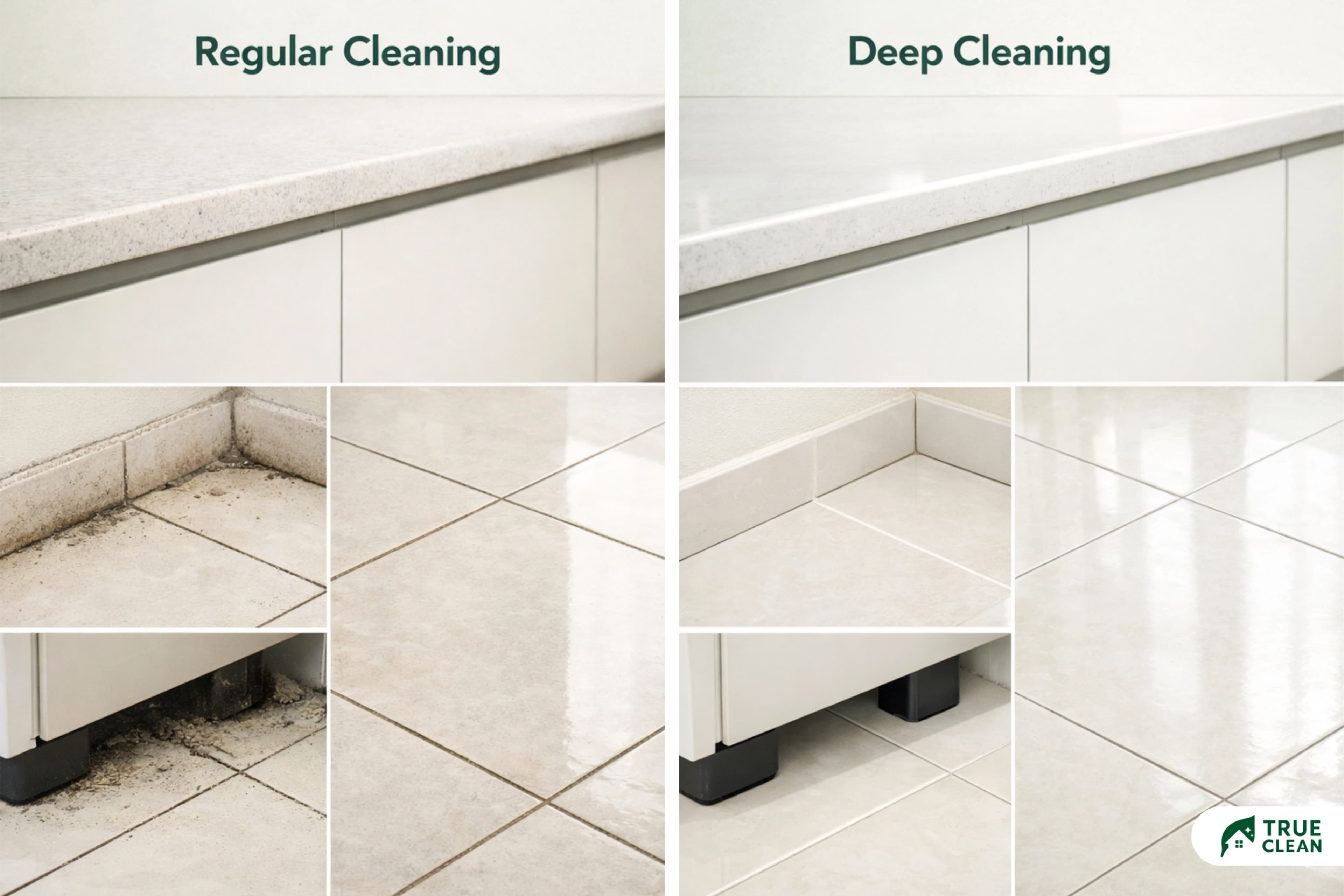
Over time, this grease attracts dust and emits odours when reheated. During daily cooking, some of these particles become airborne again, affecting indoor air quality. Regular wiping doesn’t fully remove this residue. Periodic oven cleaning and kitchen degreasing help reduce grease-related AQI issues and support fresher indoor air.
Bathrooms, Moisture, and Airborne Contaminants
Bathrooms influence indoor air quality more than most people realise. Constant moisture, hot showers, and limited ventilation create ideal conditions for invisible pollutants.
Moist environments encourage:
- Mould spores that spread through damp corners and grout lines.
- Bacterial growth on wet surfaces and fixtures.
- Persistent damp odours that signal trapped contaminants.
These contaminants spread through air circulation, especially in compact apartments or homes with shared ventilation. Without targeted bathroom deep cleaning, bathrooms remain ongoing sources of indoor air pollution.
Why Everyday Cleaning Alone Doesn’t Improve AQI
Everyday cleaning focuses on appearance—wiping, sweeping, and quick mopping. However, AQI improvement requires source removal, not just redistribution of dust and residue.
Common everyday cleaning issues include:
- Dry dusting that lifts particles into the air instead of capturing them.
- Harsh chemicals that release strong fumes and add to indoor pollutants.
- Incomplete cleaning of soft surfaces like carpets, sofas, and mattresses.
- Ignoring hidden dust zones such as fans, under furniture, and storage tops.
Without addressing carpets, upholstery, kitchens, and moisture-prone areas, indoor AQI remains largely unchanged even when surfaces look neat.
How Professional Home Cleaning Helps Improve Indoor AQI
Improving indoor air quality requires a structured, health-focused approach rather than only visual cleaning. Professional home cleaning targets the exact sources that impact indoor AQI.
Expert cleaning services focus on:
- Deep extraction from carpets and upholstery using fabric-appropriate methods.
- Degreasing kitchens and ovens to remove sticky buildup that affects air quality.
- Removing dust from hidden and high-touch areas like fan blades, tops of cupboards, and door frames.
- Addressing moisture-prone bathrooms to reduce mould and odour-causing buildup.
- Using eco-friendly, low-VOC products that clean without harsh residual fumes.
This method removes pollutants instead of simply moving them around, leading to noticeably fresher indoor air and more comfortable living spaces.
What This Means for Healthier Living Spaces
If your home feels stuffy, dusty, or uncomfortable despite regular cleaning, indoor AQI is often the hidden reason. Clean floors and tidy surfaces don’t automatically mean clean air.
At TrueClean, cleaning is approached with health in mind. By focusing on dust-trapping fabrics, grease-heavy kitchens, moisture-prone bathrooms, and hidden buildup, we help homes move beyond visual cleanliness toward genuinely healthier living spaces.
Cleaner air means better comfort, easier breathing, and peace of mind for families—especially in busy Indian homes that are in use all day, every day.
Help Hub:
Questions & Answers
In many Indian homes, dust settles inside sofas, carpets, curtains, and even ceiling fans. When fans or ACs run, that dust keeps circulating, so the home feels dusty even after cleaning.
Yes—but only when cleaning removes dust from hidden areas. Regular mopping helps surfaces, but carpets, upholstery, kitchens, and bathrooms need deeper cleaning to reduce indoor AQI.
They do. Fabric surfaces trap dust, allergens, and fine particles. Every time someone sits, walks, or lies down, those particles re-enter the air—especially in closed homes.
Cooking releases fine grease particles that settle on cabinets, appliances, and ovens. When not removed properly, this buildup affects air quality and causes lingering odours.
For most Indian homes, a deep clean every 4–6 months helps keep indoor air healthier. Homes with children, pets, or heavy cooking may need it more often.