.webp&w=3840&q=75)
Bathroom cleaning often looks complete when surfaces shine. However, shine alone does not equal hygiene. Many homes appear clean while hidden bacteria, moisture, and residue quietly build up in places people rarely notice. That gap between appearance and actual cleanliness is where most bathroom problems begin.
Bathroom spaces deal with constant humidity, organic residue, and frequent contact. Because of this, bathroom cleaning requires a different approach than routine dusting or wiping. Understanding what is usually missed helps homeowners make better decisions for health, safety, and long-term upkeep.
Why Bathrooms Get Dirty Faster Than Any Other Room
Bathrooms experience more moisture than any other area in the home. Warm showers create condensation that settles into grout lines, corners, and fixtures. Over time, this moisture encourages mould growth and bacterial spread.
In addition, bathroom surfaces are touched multiple times daily. Flush handles, taps, switches, and door handles collect germs even when they look clean. Regular wiping removes visible marks but often leaves behind invisible contaminants.
This is why bathroom cleaning cannot rely on surface shine alone. True cleanliness comes from addressing moisture, residue, and high-touch areas together.
The Hidden Areas Most Bathroom Cleaning Misses
Many homeowners focus on obvious zones like sinks and toilet bowls. However, some of the most critical problem areas remain untouched during routine cleaning.
Grout and Tile Lines
Grout absorbs moisture and soap residue. Over time, it becomes a breeding ground for bacteria and mould. Even light-coloured grout can look acceptable while still harbouring germs below the surface.
Behind Fixtures and Fittings
Areas behind toilets, under sinks, and around pipe joints are often ignored. These spots collect dust, moisture, and organic residue that contribute to odours and long-term damage.
High-Touch Surfaces
Flush buttons, tap handles, shower controls, and switches are some of the most contaminated surfaces in the bathroom. Without proper bathroom sanitization, these areas continue spreading bacteria throughout the space.
Exhaust Fans and Corners
Poor airflow allows moisture to linger. Dusty exhaust fans and ceiling corners trap humidity, accelerating mould growth even in bathrooms that appear clean.
.webp)
Why Regular Products Are Not Enough
Many households rely on strong-smelling cleaners, assuming scent equals effectiveness. In reality, harsh chemicals may remove stains but still fail to address residue buildup and bacteria in porous surfaces.
Moreover, chemical-heavy products can irritate skin, eyes, and respiratory systems. In homes with children, pets, or allergy-sensitive individuals, this creates an additional health risk.
Professional bathroom cleaning focuses on controlled application, proper dwell time, and residue-free methods. This ensures surfaces are not only clean but also safe to use daily.
The Difference Between Bathroom Cleaning and Bathroom Deep Cleaning
Understanding this difference helps prevent confusion and poor expectations.
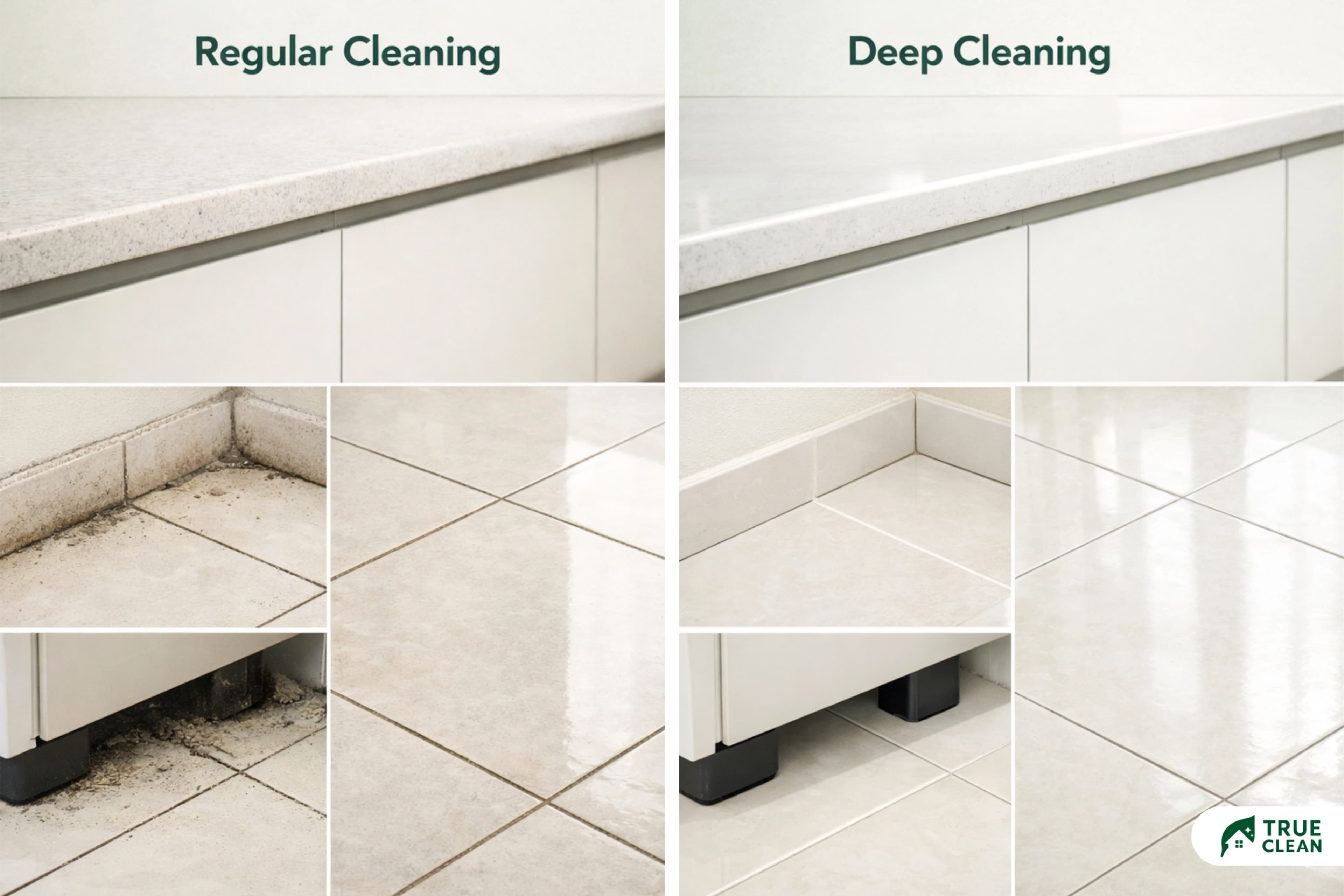
Bathroom cleaning maintains hygiene through consistent upkeep of surfaces, fixtures, and high-touch zones.
Bathroom deep cleaning targets neglected areas such as grout, scale buildup, behind fittings, and moisture-prone corners.
Both are important. However, without periodic deep cleaning, routine maintenance loses effectiveness over time.
Why Bathroom Hygiene Impacts Overall Home Health
Bathrooms directly affect indoor air quality. Moisture, mould spores, and lingering residue circulate beyond the bathroom itself. This can impact respiratory comfort and overall cleanliness throughout the home.
Additionally, bathrooms are shared spaces. Poor hygiene in one bathroom increases the risk of cross-contamination across bedrooms, kitchens, and living areas.
This is why professional bathroom cleaning plays a larger role than most homeowners realise. It protects not just surfaces, but daily living conditions.
.webp)
Quick Answer: Is a shiny bathroom always clean?
No. A shiny bathroom can still contain bacteria, mould spores, and residue in grout, corners, and high-touch areas. True bathroom cleaning focuses on hygiene, not just appearance.
When to Consider Professional Bathroom Cleaning
There are clear signs that routine cleaning is no longer enough.
- Persistent odours despite frequent cleaning
- Discolouration in grout or tile edges
- Increased mould spots after showers
- Skin irritation or allergy flare-ups
- Bathrooms that never feel truly fresh
In these cases, professional bathroom cleaning restores hygiene at a deeper level and resets the space safely.
How Consistent Bathroom Cleaning Saves Time and Cost
Ignoring hidden buildup leads to long-term damage. Grout erosion, fixture corrosion, and mould remediation are expensive to fix once problems escalate.
Regular, structured bathroom cleaning prevents these issues early. Over time, this reduces maintenance costs and keeps bathrooms functional and hygienic with less effort.
Conclusion
Bathroom cleaning is not about perfection or harsh chemicals. It is about understanding how moisture, touch, and residue interact every day. When these factors are ignored, even the shiniest bathrooms can quietly become unhygienic.
At TrueClean, we approach bathroom cleaning with this deeper understanding—focusing on hygiene, safety, and long-term freshness rather than surface shine alone. Our structured methods ensure bathrooms feel genuinely clean, comfortable, and healthy to use, not just visually spotless.
A bathroom that feels fresh, smells clean, and stays hygienic longer is a sign of cleaning done right.
Help Hub:
Questions & Answers
Bathrooms get dirty faster because constant moisture, steam, and frequent touch points allow bacteria, soap residue, and mould to build up in hidden areas that regular cleaning misses.
Grout lines, behind toilet bases, under sinks, exhaust fans, tile edges, and high-touch surfaces like taps and flush buttons are commonly overlooked during routine bathroom cleaning.
Yes. Bathroom cleaning focuses on regular surface hygiene, while bathroom deep cleaning targets embedded dirt, scale, mould, and residue in grout, corners, and hard-to-reach areas.
Yes. Proper bathroom cleaning reduces mould spores, trapped moisture, and lingering odours that affect indoor air quality and can spread beyond the bathroom.
If odours persist, grout darkens, mould reappears quickly, or the bathroom never feels truly fresh despite regular cleaning, professional bathroom cleaning is usually required.