.webp&w=3840&q=75)
A kitchen doesn’t get dirty all at once. Grease vapours, food spills, and moisture slowly settle into drawers, sinks, appliances, and surfaces we use every day. Even when things look tidy, residue often builds up in places we don’t notice until it becomes a problem.
This guide focuses on everyday kitchen problem areas—drawers, sinks, drains, dishwashers, ovens, and glass stovetops—and explains how to clean them properly without damaging surfaces.
Why Kitchen Deep Cleaning Needs a Different Approach
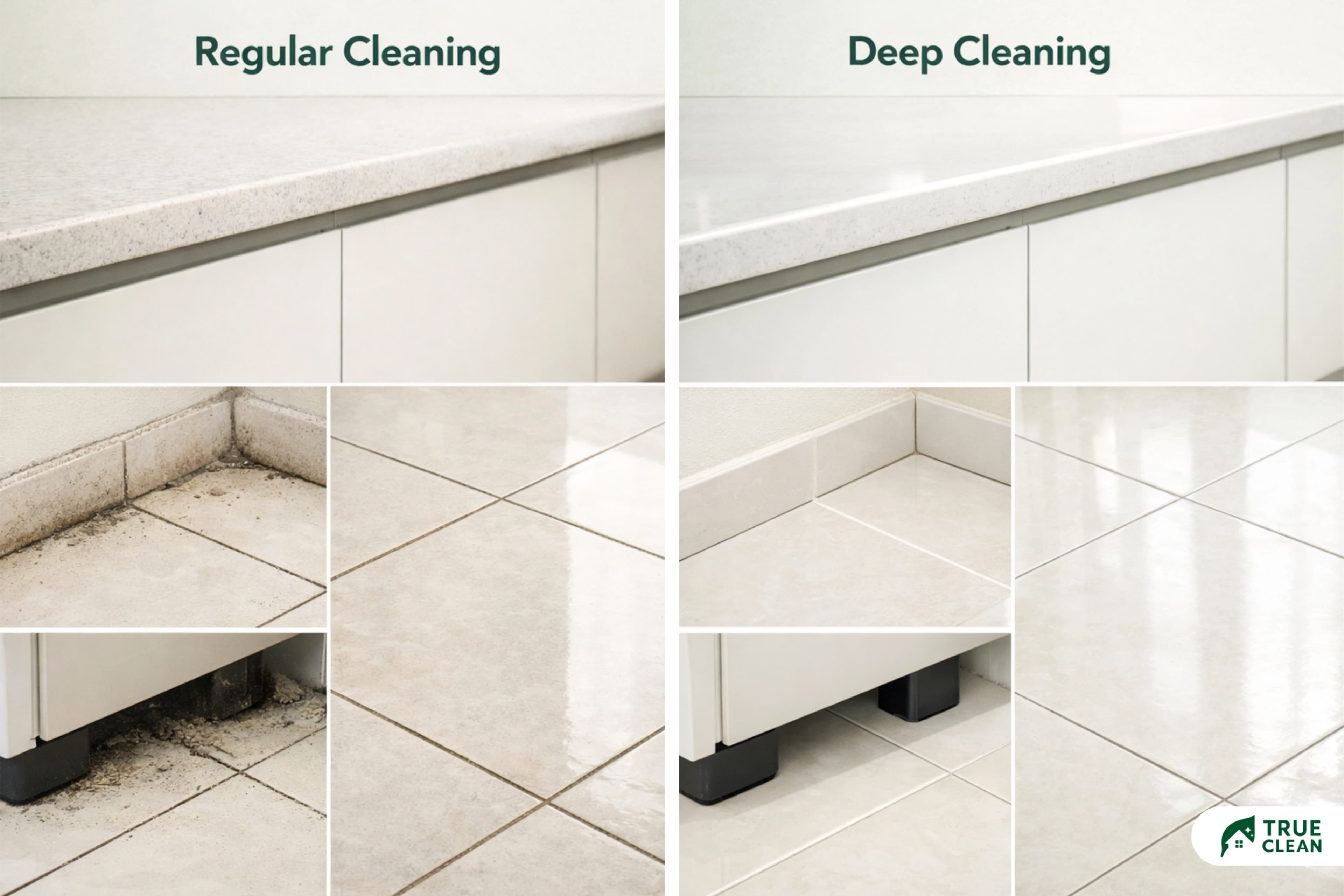
Unlike other rooms, kitchens deal with oil vapours, food spills, and heat. Regular wiping keeps surfaces looking fine, but it doesn’t remove the sticky film that settles on cabinets, handles, and appliances over time.
Deep kitchen cleaning focuses on:
- Hidden grease buildup
- Food residue in drains and sinks
- Appliances that are used daily but rarely cleaned properly
Organizing Kitchen Drawers for Daily Use
Kitchen drawers often become cluttered because items are placed wherever there’s space.
Start With a Full Reset
Empty all drawers completely. Remove broken utensils, unused tools, and duplicate items you don’t need.
Assign Purpose to Each Drawer
Keep cooking tools near the stove, cutlery near the dining area, and storage items together. This reduces unnecessary movement and keeps drawers cleaner.
Use Simple Dividers
Drawer dividers prevent items from shifting and collecting crumbs. Even basic separators make cleaning easier and faster.
Organized drawers reduce mess and help maintain cleanliness long-term.
Hack: Line drawers with a thin washable mat or cloth to catch crumbs and make cleaning quicker.
How to Deep Clean a Kitchen Step by Step
Deep kitchen cleaning should follow a logical flow to avoid redoing work.
Begin With Upper Surfaces
Oil vapours rise while cooking, which means upper cabinets, shelves, and exhaust areas collect grease first. Wipe these areas before moving lower.
Clean Countertops and Backsplashes
Use a gentle cleaner suitable for your surface type. Pay attention to edges where food particles often settle.
.webp)
Finish With Floors
Always clean the floor last so fallen crumbs and dust don’t undo your work.
This top-to-bottom approach ensures effective deep cleaning without spreading dirt.
Hack: Wipe greasy cabinets with warm water first—heat loosens oil before using any cleaner.
How to Clean the Kitchen Sink and Sink Drain
Kitchen sinks handle food waste daily, making them one of the most bacteria-prone areas.
Sink Cleaning
Scrub the sink using a non-abrasive cleaner to remove stains and residue. Don’t forget faucet handles and the area around the drain opening.
How to Clean a Sink Drain
Food particles and grease stick inside drains. Flush with hot water, followed by baking soda and vinegar, then rinse again with hot water.
Regular drain cleaning prevents slow drainage and unpleasant smells.
Hack: Rub half a lemon with salt inside the sink to reduce stains and neutralise odours naturally.
How to Clean a Dishwasher Properly
Dishwashers clean dishes—but they also need cleaning themselves.
Filter Check
Remove and clean the dishwasher filter to get rid of trapped food debris.
.webp)
Interior Cleaning
Run an empty cycle with vinegar or a dishwasher-safe cleaner to break down grease and residue.
A clean dishwasher works more efficiently and prevents odours from transferring to dishes.
Hack: Leave the dishwasher door slightly open after use to reduce moisture buildup.
How to Clean an Oven Naturally
Ovens collect grease splashes and burnt food, which hardens over time.
Natural Oven Cleaning Method
Make a paste using baking soda and water. Apply it to greasy areas and leave it overnight. Wipe clean the next day using a damp cloth.
Avoid Harsh Scraping
Metal scrapers can damage oven surfaces. Gentle methods protect the appliance while still removing buildup.
Cleaning the oven naturally keeps it safe for food preparation and avoids chemical residue.
Hack: Clean the oven when it’s slightly warm—not hot—to make grease easier to remove.
How to Clean a Glass Stovetop Without Scratches
Glass stovetops look sleek but need careful cleaning.
Daily Maintenance
Wipe the surface after it cools down to prevent stains from setting.
Deep Cleaning
Use a cleaner designed for glass stovetops or a mild paste of baking soda and water. Wipe gently using a soft cloth.
Avoid rough sponges or sharp tools that can scratch the surface permanently.
Hack: Use a microfiber cloth instead of paper towels to avoid streaks and fine scratches.
Kitchen Cleaning Habits That Make a Big Difference
Small habits can reduce the need for frequent deep cleaning:
- Wipe cabinet handles weekly
- Clean sink drains regularly
- Avoid leaving spills overnight
- Ventilate the kitchen during cooking
These simple actions keep grease and residue under control.
When Professional Kitchen Cleaning Is Helpful
Sometimes, kitchen grime becomes difficult to manage with regular cleaning alone.
Signs you may need professional kitchen cleaning:
- Sticky cabinet handles despite cleaning
- Strong smells from drains or sink
- Grease buildup on appliances
- Stains that don’t come off easily
This is where a professional service like TrueClean helps by focusing on deep cleaning areas that are time-consuming and often missed during routine cleaning.
Keeping Your Kitchen Clean After Deep Cleaning
Once your kitchen is deep cleaned and organized, maintaining it becomes much easier. Regular wiping, proper storage, and monthly checks of drains and appliances help preserve cleanliness.
A clean kitchen isn’t just about appearance—it supports better hygiene and everyday comfort.
Help Hub:
Questions & Answers
Fruit flies usually come from overripe fruits, open drains, or wet waste. Remove the source first, keep fruits covered, clean the sink drain, and avoid leaving food scraps overnight. Regular cleaning helps prevent them from returning.
A kitchen pantry should be organized by grouping similar items together and keeping frequently used items at eye level. Dry goods should be stored in airtight containers to avoid pests and spills. Decluttering unused items makes the pantry easier to maintain.
Kitchen smells often come from sink drains, garbage areas, dishwashers, or greasy cabinets. Even if surfaces look clean, residue inside drains or appliances can cause odours. Deep cleaning these hidden areas helps remove the source of the smell.
Grease builds up on kitchen cabinets due to oil vapours from cooking. Wiping them with warm water first helps loosen the grease, followed by a gentle cleaner. Regular cleaning prevents the sticky layer from becoming hard to remove.
Water splashing or leaking near the kitchen sink tap is usually caused by mineral buildup, loose fittings, or clogged aerators. Cleaning the tap head and checking fittings can improve water flow and reduce mess around the sink.