.webp&w=3840&q=75)
Most kitchens look clean at first glance. The counters are wiped, the dishes are washed, and the floor is mopped. Yet, many Indian households still deal with lingering smells, greasy surfaces, or frequent stomach upsets without realizing the source may be their kitchen. The truth is, kitchen cleaning often focuses on what is visible, while hygiene issues develop quietly in areas that are rarely addressed.
Indian kitchens, with daily cooking, oil splatter, spice residue, and heat, demand a different level of attention. Understanding where cleanliness usually falls short helps families protect their health and maintain safer cooking spaces.
Why Indian Kitchens Need More Than Surface Cleaning
Indian cooking involves frying, tempering, and slow cooking. These processes release fine oil particles into the air, which settle on cabinets, walls, appliances, and even ceilings. Over time, this thin grease film attracts dust and bacteria.
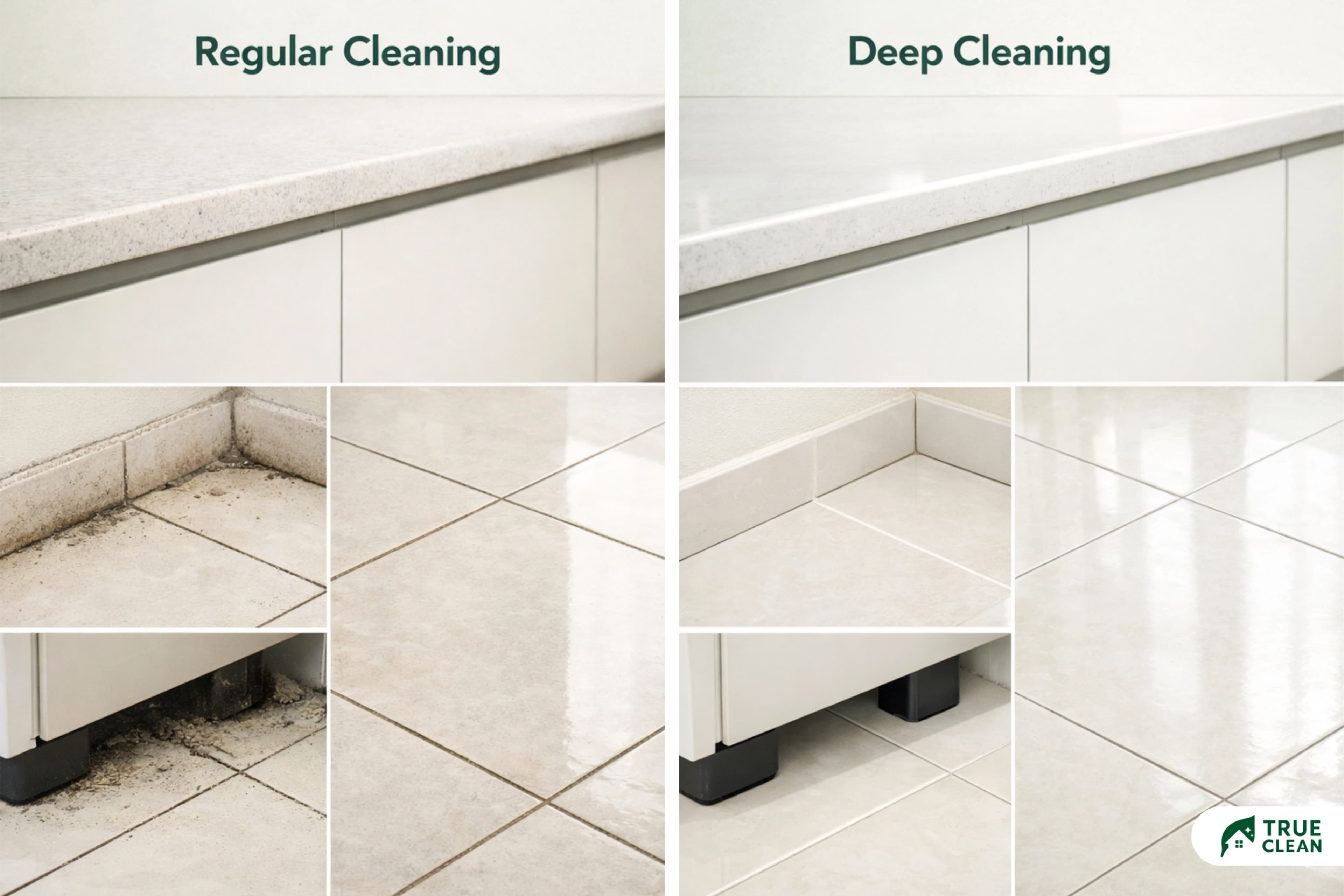
Regular kitchen cleaning removes surface dirt, but it does not break down layered grease or hidden residue. As a result, kitchens may look neat but remain unhygienic at a deeper level.
This is one of the main reasons kitchens feel “never fully clean,” even with daily effort.
Hidden Hygiene Risks Most Homes Overlook
Some of the most unhygienic areas in kitchens are also the most ignored.
Cabinet Handles and Edges
Handles are touched repeatedly while cooking, often with oily hands. Wiping cabinet fronts is common, but edges and handles collect bacteria quickly.
Sink Drains and Traps
Food particles, moisture, and warmth create ideal conditions for bacterial growth. Even if the sink looks clean, the drain area often harbours germs and odours.
Countertop Corners and Seams
Residue accumulates in joints and corners where wiping cloths rarely reach properly. These overlooked zones explain why kitchen hygiene issues persist despite regular home cleaning.
.webp)
Oven Cleaning: The Most Ignored Hygiene Hotspot
Oven cleaning is one of the most neglected parts of kitchen maintenance in Indian homes. Many households assume ovens do not need frequent cleaning, especially if they are used occasionally. In reality, ovens accumulate grease, food spills, and carbon residue that affect both hygiene and cooking quality.
Over time, this buildup:
- Creates persistent odours
- Encourages bacterial growth
- Affects food taste
- Increases smoke during use
Proper oven cleaning removes baked-on grease and residue that daily wiping cannot handle. This step alone significantly improves overall kitchen hygiene.
Why Daily Wiping Isn’t Enough for Kitchen Hygiene
Daily cleaning plays an important role in maintenance, but it has limitations. Cloth wiping often spreads grease rather than removing it. Mild cleaners may freshen surfaces without breaking down stubborn residue.
In addition, repeated use of harsh chemicals near food areas can leave harmful residues behind. This creates a different risk—chemical exposure in cooking zones.
Effective kitchen cleaning requires the right balance: methods strong enough to remove grease and bacteria, yet safe for food preparation areas.
The Difference Between Clean and Hygienic Kitchens
A clean kitchen looks orderly. A hygienic kitchen protects health.
Hygiene involves:
- Removing grease layers
- Reducing bacteria and allergens
- Preventing cross-contamination
- Maintaining safe air quality
Without periodic deep intervention, even the most disciplined daily kitchen cleaning routines lose effectiveness.
When Professional Kitchen Cleaning Becomes Necessary
Certain signs indicate that routine efforts are no longer enough.
- Grease buildup that returns quickly
- Persistent smells even after cleaning
- Sticky cabinets or dull surfaces
- Increased pest activity
- Cooking areas that never feel fresh
At this stage, professional kitchen cleaning resets hygiene levels and restores safety. Once done, regular maintenance becomes easier and more effective.
.webp)
So, Is Your Kitchen Actually Clean?
If a kitchen looks clean but still smells, feels greasy, or attracts pests, it is likely missing deeper hygiene care. True cleanliness is not about perfection; it is about protecting the space where food is prepared every day.
At TrueClean, kitchen cleaning is approached with health and safety in mind—using structured methods, food-safe practices, and eco-friendly solutions that remove grease and bacteria without compromising indoor air quality. The result is a kitchen that feels genuinely clean, not just visually tidy.
Help Hub:
Questions & Answers
In Indian kitchens, oil vapours from cooking settle as a thin film on cabinets, walls, and appliances. Regular wiping spreads this grease instead of removing it completely, causing the kitchen to feel sticky again quickly.
Sink drains, oven interiors, cabinet handles, stove backsplashes, and countertop joints are often the most unhygienic areas because they trap moisture, grease, and food residue.
Regular kitchen cleaning helps with daily maintenance, but it cannot remove layered grease, bacteria, and residue that build up over time. Periodic deep cleaning is necessary for proper hygiene.
In Indian households, oven cleaning should ideally be done every 3–4 months, or sooner if the oven is used frequently, to prevent grease buildup and odours.
Not always. Harsh chemicals can leave residues on surfaces where food is prepared. Using food-safe or eco-friendly cleaning methods reduces this risk significantly.
Professional kitchen cleaning is recommended when grease returns quickly, smells persist, pests appear, or the kitchen never feels fresh despite regular cleaning.