.webp&w=3840&q=75)
A bathroom may look clean, yet still hide moisture, bacteria, and residue in places we don’t notice. Soap scum, hard water stains, and damp corners slowly build up inside cabinets, around windows, and inside shower drains. That’s why learning how to deep clean a bathroom—and not just surface clean it—makes a real difference.
This guide shares practical tips to organize bathroom cabinets, deep clean key areas, and maintain hygiene with small habits that actually work.
Step 1: Organize Bathroom Cabinets Before Deep Cleaning
Before you start deep cleaning, organizing cabinets is essential. Clutter traps moisture and makes cleaning harder.
How to do it
Remove everything from the cabinet and discard expired medicines, old cosmetics, and unused products. Group daily-use items separately from backups to avoid overcrowding.
Use small trays or baskets so items don’t spill or leak directly onto shelves.
Pro Tip: Line cabinet shelves with newspaper or shelf liners. They absorb moisture and catch leaks, keeping cabinets clean for longer.
.webp)
Step 2: Always Deep Clean the Bathroom From Top to Bottom
Deep cleaning works best when done in the right order. Cleaning randomly often means redoing work.
How to do it
Start with shelves, exhaust fans, and upper tiles. Move down to sinks, toilets, and finally floors. This prevents dust and grime from falling onto already cleaned areas.
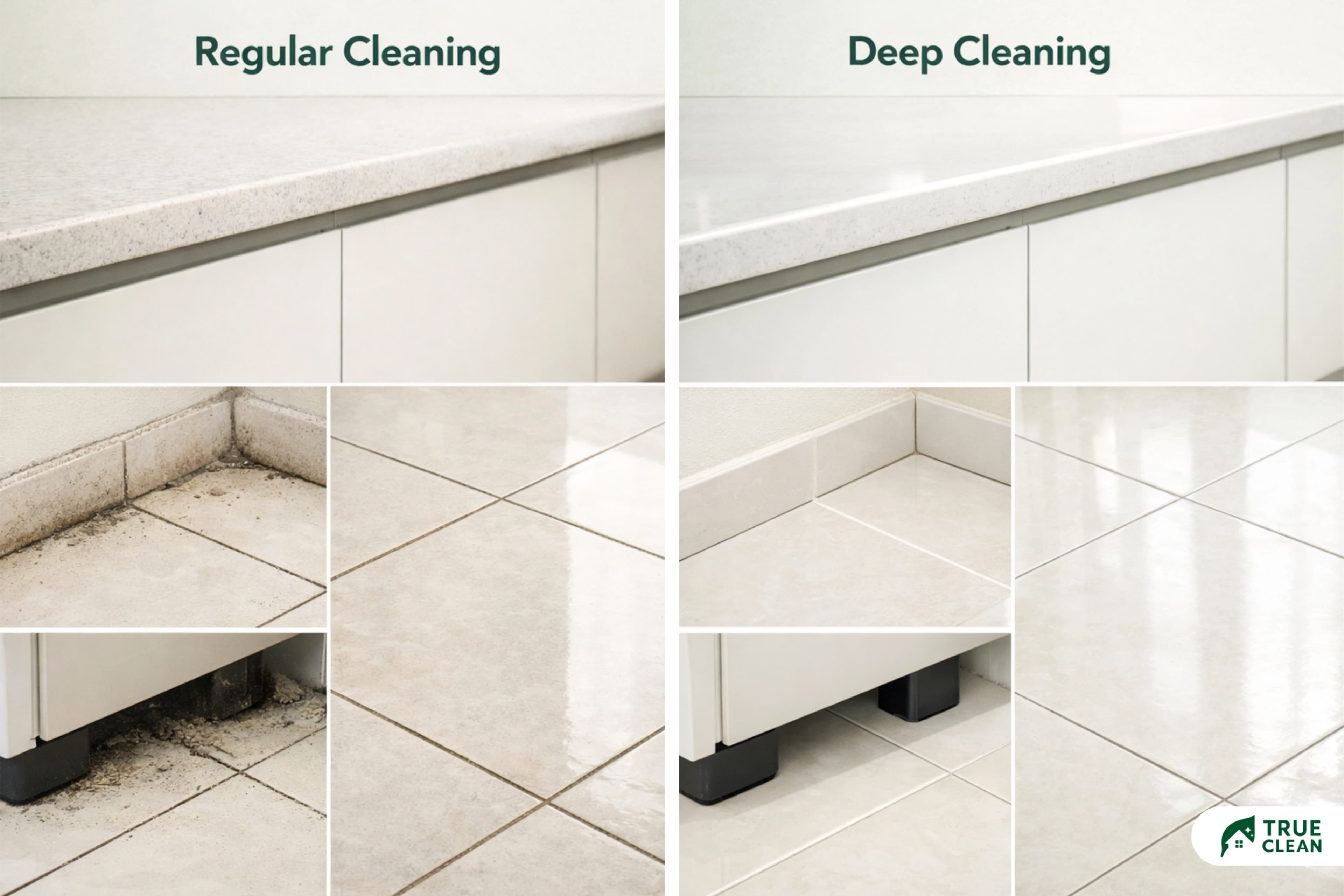
Focus on grout lines and edges where buildup hides.
Pro Tip: Bathroom corners stay dirty because mops don’t reach them well. Once a month, wipe corners by hand with a cloth to prevent stubborn buildup.
Step 3: Pay Extra Attention to Tiles, Grout, and Fixtures
Bathroom tiles and fixtures collect soap residue and water stains quickly.
How to do it
Use a soft brush for grout lines instead of a cloth. Clean faucet handles, shower knobs, and the base of fixtures—these are high-touch areas often missed during regular cleaning.
Rinse surfaces thoroughly to avoid residue.
Pro Tip: After cleaning, wipe fixtures dry. Dry surfaces reduce water marks and keep fittings shiny for longer.
.webp)
Step 4: Clean Bathroom windows the Smart Way
Bathroom windows are exposed to constant moisture, making them prone to stains and dust buildup.
How to do it
First, remove dry dust from frames, grills, and tracks using a cloth. Then clean the glass using a vinegar-and-water solution and wipe dry immediately.
Don’t forget the window tracks, where dirt settles easily.
Pro Tip: Clean bathroom windows and mirrors right after a hot shower. Steam loosens residue, making stains easier to wipe without heavy scrubbing.
Step 5: Keep Shower Drains Clean to Avoid Odours
Shower drains are one of the most common sources of bad smells in bathrooms.
How to do it
Remove visible hair or debris from the drain opening. Use hot water followed by baking soda and vinegar to break down soap residue naturally.
Flush again with hot water.
Pro Tip: Once a week, pour a kettle of hot water into the drain. It melts soap residue before it hardens and causes blockages.
Step 6: Control Bathroom Odours Naturally
Bad odours often come from moisture and hidden buildup rather than visible dirt.
How to do it
Clean behind toilets, around the base, and under sinks regularly. These areas trap moisture and bacteria.
Pro Tip: Place a small bowl of baking soda behind the toilet or inside a cabinet. It absorbs moisture and odour naturally without chemicals.
Step 7: Know When to Use Bathroom Cleaning Services
Sometimes, regular cleaning isn’t enough—especially when buildup has been ignored for months.
When to consider professional help
- Persistent stains that don’t go away
- Mould smell near drains
- Hard water marks on tiles and fixtures
- Cabinets and fittings feeling sticky or dull
This is where TrueClean’s bathroom cleaning services help. The team focuses on deep cleaning, sanitising, and reaching difficult areas that are usually missed during routine cleaning.
Pro Tip: Scheduling periodic deep cleaning with TrueClean reduces long-term damage and makes daily bathroom maintenance easier.
Step 8: Maintain Bathroom Cleanliness After Deep Cleaning
Maintenance is what keeps a bathroom hygienic between deep cleaning sessions.
How to do it
Wipe wet surfaces after use, avoid clutter in cabinets, and clean drains and windows once a month. Focus on high-touch areas like handles and switches.
Pro Tip: Ten minutes of weekly maintenance saves hours of deep cleaning later.
Also Read: Bathroom Cleaning Isn't Just About Shine: What Most Homes Miss
Help Hub:
Questions & Answers
Shower drains usually clog because of hair, soap residue, and product buildup. Over time, these materials stick together and block water flow, leading to slow drainage and bad odours.
Loofahs collect moisture and dead skin, which makes them a breeding ground for bacteria. Rinse thoroughly after use, squeeze out excess water, and let them dry completely. Replace loofahs every 3–4 weeks for hygiene.
Shower tiles should be cleaned regularly to prevent soap scum and water stains. A mild cleaner with a soft brush works well for tiles, while grout lines need extra attention to remove hidden buildup.
Yes, eco-friendly cleaning products are effective when used correctly and regularly. TrueClean uses eco-friendly cleaning products that remove grime and bacteria without leaving harsh chemical residue, making them safer for daily use.
Areas like cabinet interiors, window tracks, shower drains, exhaust fans, and tile corners are often overlooked. These spots collect moisture and dirt quickly, even if the bathroom looks clean on the surface.